Spoiler note: This review discusses the characters and some relationship developments in Apple TV’s 2026 series, including Max’s attempts to connect with the daughter. It does not reveal the ending in detail.
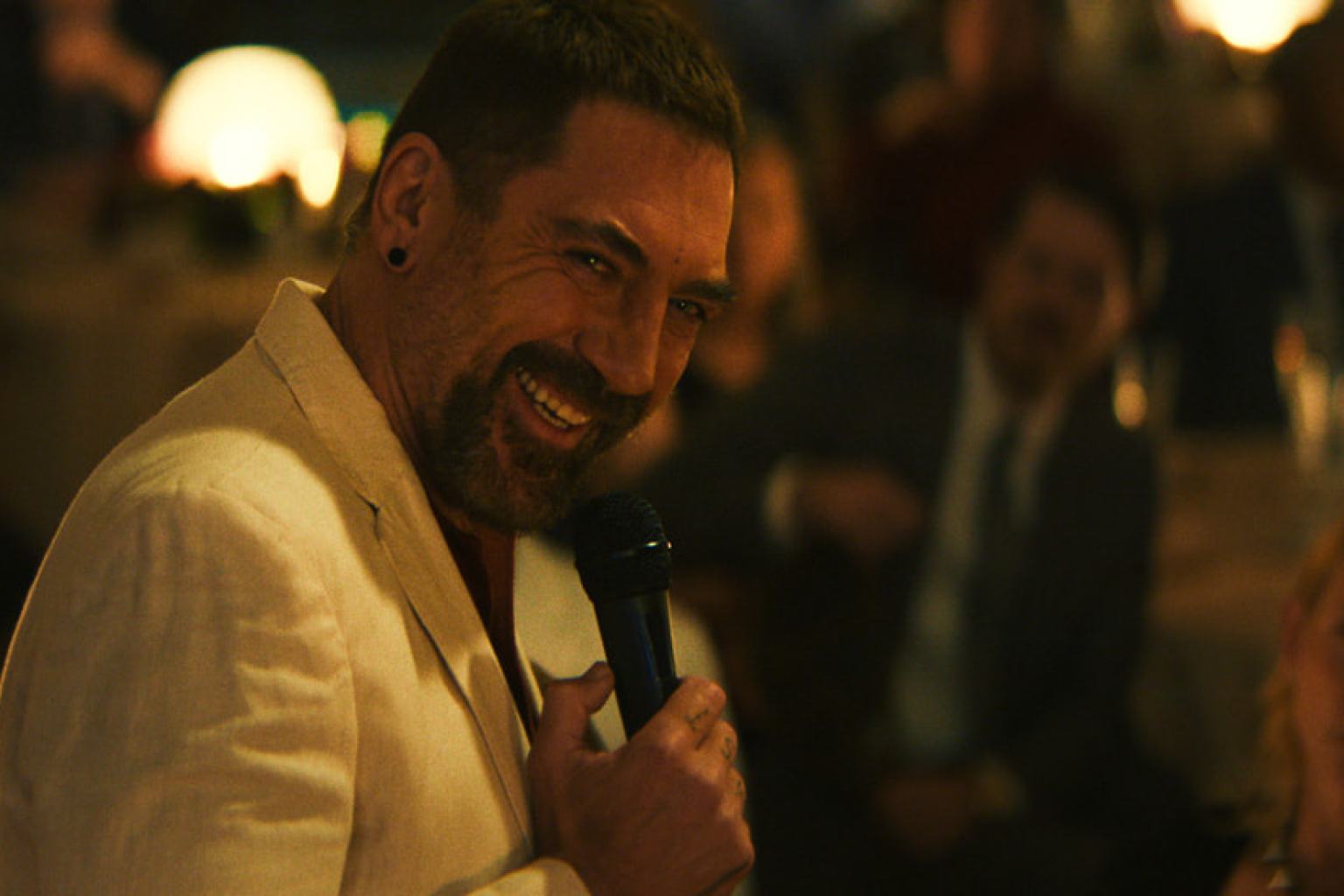
Featured image: Javier Bardem as Max Cady in Cape Fear (2026). Courtesy of Apple TV. Source: Apple TV Press. Image rights remain with the respective rights holders.
There were moments in Cape Fear when I caught myself looking for some humanity in Max Cady.
I knew he was disturbing. I knew enough to distrust his intentions. Yet when he seemed to be trying to connect with the daughter, I briefly wondered whether something about that connection might be genuine. Perhaps there was a feeling he wasn’t performing, someone he could care about without wanting something from them.
I came to read it as manipulation. But the fact that I had entertained the possibility was unsettling in itself.
That uncertainty was a large part of why Cape Fear worked for me. It kept me watching closely, questioning what people said and waiting to see what Max would do with whatever he had learned about them. I found it gripping throughout, with characters I cared about even when their decisions frustrated me.
Waiting a week for another episode was occasionally the problem. Which, as complaints about a thriller go, is probably a reasonably good one.
What is Cape Fear about?
Created by Nick Antosca, the ten-episode psychological thriller stars Javier Bardem as Max Cady, whose release from prison brings him back into the lives of attorneys Anna and Tom Bowden, played by Amy Adams and Patrick Wilson.
His pursuit of vengeance threatens their family and gradually unsettles the life they have built. The series draws on John D. MacDonald’s The Executioners and the earlier Cape Fear films, with Martin Scorsese and Steven Spielberg among its executive producers. Series background from Amblin.
My interest here is in the Apple TV series itself, particularly the way Max manipulates people and how living under threat changes the family around him.
The suspense comes from feeling that nowhere is safe
What I enjoyed most was the sustained sense of unease.
A threat becomes especially frightening when it starts affecting places and relationships that should feel familiar. You begin watching ordinary interactions differently. Someone’s interest stops seeming harmless. A conversation becomes something to examine afterwards.
That was the tension I felt watching Cape Fear. Max’s presence made it difficult to relax, even during moments that seemed quieter. I kept wondering what he wanted from an exchange and how it might matter later.
The suspense also depended on my investment in the characters. I wanted to know what would happen because I cared about what they stood to lose. Without that, a series can become an exercise in waiting for the next horrible thing.
Here, the fear had somewhere to land.
Max’s apparent humanity made him harder to trust
Bardem’s Max held my attention because I couldn’t settle comfortably into a single response to him.
He was genuinely disturbing, but there were moments when I found myself wondering whether I had glimpsed something else. His attempts to connect with the daughter were the clearest example.
For a moment, I wanted to believe there was some sincerity there. That didn’t mean I trusted him or forgot what he was capable of. It meant I was still willing to consider that a person capable of cruelty might also be capable of an attachment that wasn’t entirely self-serving.
As I watched, though, I read that apparent connection as another way of gaining access to her.
That made those moments more uncomfortable. I had briefly given him the benefit of the doubt, and the series made me question why. Was there something convincing in his behaviour, or was I supplying the humanity I wanted to find?
There is something frightening about a character who can make you hesitate despite everything you already know about him. Max didn’t have to become sympathetic to create that hesitation.
I cared about the Bowdens even when they frustrated me
I sympathised with the family, although I didn’t agree with every choice they made.
For me, their mistakes remained believable. Fear doesn’t necessarily make people more perceptive or sensible. It can make them defensive, secretive or so focused on one danger that they fail to recognise another.
Watching from a safe distance, it is easy to feel that the right decision should be obvious. Living inside the situation would be considerably less straightforward.
That helped me stay involved when I was frustrated with them. I could want someone to behave differently without feeling that the character had stopped making sense.
The family also gave the series tension beyond Max himself. He could threaten them, but their responses affected how far that threat reached. What they shared, what they withheld and how they treated one another all mattered.
I was watching people try to protect their family while struggling with the pressure inside it. That felt credible to me.
The characters gave the story its weight
I enjoyed the characters as much as the suspense, and the two were closely connected.
Anna and Tom needed to feel like people with a life beyond being Max’s targets. With Amy Adams and Patrick Wilson in those roles, I remained interested in the family even when Max wasn’t the immediate focus.
The wider cast includes Joe Anders, Lily Collias, Malia Pyles and CCH Pounder. Apple’s official series announcement lists the ensemble.
What mattered most to my experience was that the characters’ reactions felt believable. Their fear affected their judgement and their relationships. I could follow that change without needing to approve of everything they did.
It gave Max more to work with, too. Manipulation becomes more disturbing when you understand why someone might be susceptible to it. The daughter’s apparent connection with him stayed with me for precisely that reason.
The weekly wait was frustrating in the best way
I found the pacing consistently gripping.
Watching it week by week gave me time to sit with what had happened, but it also meant stopping when I wanted to continue. I enjoyed the anticipation and resented it a little. Both can be true.
The series originally released its first two episodes together, followed by weekly instalments, with the finale arriving on 31 July 2026. All ten episodes are now available. Apple’s release details.
For anyone starting it now, the weekly wait is no longer an issue. Whether you will actually want to stop between episodes is another question.
The ending left me unsettled
Without revealing what happens, the ending worked for me because it left me uneasy in a way that suited the series.
I didn’t need to finish feeling reassured. After spending that much time watching Max manipulate people and seeing what fear did to the family, complete comfort would have felt difficult to accept.
What stayed with me was his ability to make an apparent connection feel possible. I kept returning to those moments when I wondered whether there might be some humanity left in him, and to how quickly that hope became something I distrusted.
The ending allowed that discomfort to remain.
Would I recommend Cape Fear?
Yes, particularly if you enjoy psychological thrillers built around manipulation and the feeling that danger has entered someone’s everyday life.
I found it gripping and enjoyable across the ten episodes. The suspense held, the characters felt believable, and Max was disturbing enough to keep me questioning even his quieter moments.
It is dark material, so this is a recommendation for an absorbing thriller rather than a relaxing evening. But if that is what you are looking for, I think it is well worth watching.
The moment that best captures my response is still Max trying to connect with the daughter. I wanted, briefly, to believe that he meant it.
Then I began to wonder whether making me believe that was the whole point.
If you have watched Cape Fear, did you ever find yourself looking for something genuine in Max? Or did his apparent warmth make you distrust him even more?
Content note: The series contains disturbing violence, sexual threat, coercion and psychological abuse. Check the age rating and episode advisories in your region.
Editorial note: This is a personal review of Apple TV’s 2026 limited series, rather than a comparison with the earlier films or the novel. Interpretations of the characters and their motives are my own. Whimsical Connotations is not affiliated with or endorsed by Apple, the production team or the cast.

