Creating a successful blog isn’t just about putting out random posts on topics that catch your attention. It’s about building a thoughtful, connected content strategy that serves both your audience and your goals. This is where content mapping becomes invaluable. Think of content mapping as the blueprint for your blog—a structured plan that helps you organize your ideas, identify gaps, and ensure every piece of content aligns with your overall vision.
With so much content competing for attention online, readers are drawn to blogs that offer depth, organization, and clear value. They want to find answers to their questions, explore related topics seamlessly, and feel like they’re on a journey rather than encountering isolated pieces of information. A strong content map provides exactly that—it connects your posts like a web, guiding readers through your blog while keeping them engaged longer.
Content mapping doesn’t just benefit your audience; it also simplifies your workflow as a blogger. It allows you to plan ahead, interlink related posts, and ensure your blog remains cohesive as it grows. Whether you’re just starting your blog or looking to improve your existing strategy, content mapping helps you work smarter, not harder.
Imagine you’re building a wellness blog. Instead of sporadically writing about mindfulness one week and fitness the next, a content map lets you create categories like Mindfulness, Physical Health, and Emotional Well-Being. You can then break these categories into subtopics and posts that naturally link together, like a guidebook.
This approach makes your blog more valuable to readers while boosting your SEO, as search engines recognize the interconnected structure. By the end of this guide, you’ll understand how to create a content map that turns your blog into a powerful resource for your audience and a tool for achieving your blogging goals.
Step 1: Define Your Blog’s Purpose
Your blog’s purpose is the foundation of your content map. It’s the “why” behind your blog—the reason it exists and the value it provides to readers. Think about:
Who is your target audience?
What challenges are they facing?
How can your blog help them?
What are your goals, and how do they align with the needs and aspirations of your audience?
How do you want to position your blog within your niche or industry?

This mind map outlines key questions to help identify your blog’s purpose by breaking the process into five focus areas:
Target Audience
These questions help define who your blog is for:
- Who are you writing for? Understand your audience’s demographics, interests, and behaviors.
- What are their pain points? Identify their biggest challenges or needs.
- What are their goals? Determine what they want to achieve or improve in their lives.
Purpose: Knowing your audience ensures your content resonates with the right people.
Challenges
These questions pinpoint the problems your blog aims to address:
- What challenges do they face? Think about common issues your audience struggles with.
- Where do they lack knowledge or motivation? Focus on gaps you can fill with your expertise or insights.
Purpose: Addressing challenges creates value and relevance for your readers.
Solutions
These questions explore how your blog helps:
- How can your blog make their life easier? Define the practical benefits of your content.
- What unique value can you offer? Highlight your distinctive perspective or expertise.
Purpose: Delivering solutions positions your blog as a trusted resource.
Personal Goals
These questions align your blog’s purpose with your motivations:
- Why are you passionate about this topic? Identify your driving force behind blogging.
- What do you hope to achieve? Outline your objectives, like building influence, revenue, or a community.
• How does this align with your expertise? Leverage your skills and interests for authenticity.
Purpose: Passion and alignment make your blog sustainable and meaningful.
Niche Positioning
These questions help differentiate your blog in the market:
- How is your blog unique? Focus on what sets you apart from competitors.
- What gap can your blog fill? Address underserved needs within your niche.
- What is your unique voice? Define your tone and style to connect with readers.
Purpose: Differentiation ensures your blog stands out in a crowded space.
Examples of Blog Purposes:
- Parenting Blog: Helping busy parents find practical, time-saving tips and strategies for everyday life.
- Travel Blog: Sharing affordable travel guides and insider tips to make exploring the world accessible to everyone.
- Wellness Blog: Empowering readers to build sustainable self-care routines for their physical, mental, and emotional health.
When you have a clear purpose, it becomes easier to decide what topics to cover, how to structure your posts, and how to connect with your audience.
Step 2: Develop Core Content Pillars (Main Themes)
Content pillars are the main categories or themes that represent your blog’s focus areas. These pillars should directly align with your blog’s purpose and cater to your audience’s needs.

Examples of Core Content Pillars:
For a Parenting Blog: Time-Saving Hacks for Parents, Child Development and Education, Parenting Self-Care
For a Travel Blog:Budget Travel Guides, Planning and Logistics, Cultural Experiences
For a Wellness Blog: Physical Health (Fitness, Nutrition), Mental Health (Mindfulness, Stress Management), Emotional Well-Being (Self-Care, Relationships)
Each pillar becomes a branch of your content map, guiding the type of posts you’ll create and ensuring they align with your purpose.
Step 3: Break Pillars Into Subtopics
Once you’ve defined your pillars, brainstorm subtopics for each one. These subtopics are the individual posts that make up your blog’s content.

Examples of Subtopics for Each Blog Purpose:
Parenting Blog (Pillar: Time-Saving Hacks): 10-Minute Meal Prep Ideas for Busy Parents, How to Create a Family Calendar That Works for Everyone, Top 5 Apps to Simplify Your Parenting Routine
Travel Blog (Pillar: Budget Travel Guides): How to Travel Europe on $50 a Day, 10 Affordable Destinations for Family Vacations, The Ultimate Guide to Finding Cheap Flights
Wellness Blog (Pillar: Mental Health): Simple Mindfulness Practices for Busy People, 5 Techniques to Manage Anxiety at Work, How Journaling Can Improve Your Mental Clarity
Step 4: Plan Interconnected Series
A content series is a group of related posts under one pillar or theme. It keeps readers engaged and encourages them to explore more of your content.
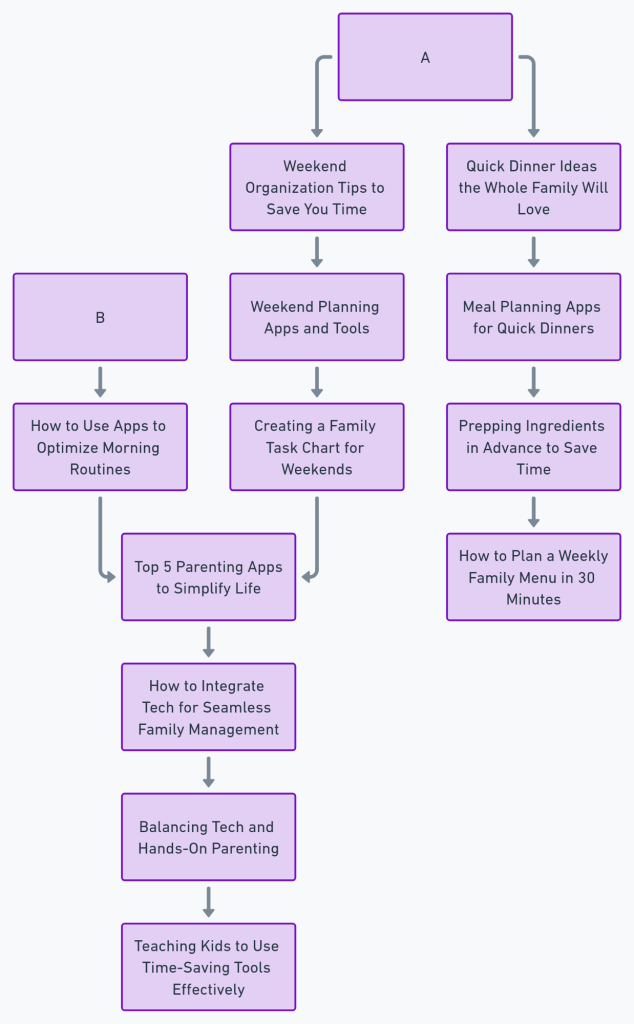
This flowchart illustrates an interconnected content series for the Time-Saving Hacks for Parents pillar, demonstrating how individual topics like morning routines, quick dinners, and weekend organization build upon each other. Each topic is linked to subtopics, such as using apps for meal prep or creating task charts, which enhance practical strategies with technology and planning tools. The series progresses naturally, integrating tech for seamless family management while balancing hands-on parenting, culminating in advanced strategies like teaching kids to use time-saving tools. This structure ensures readers can navigate a cohesive and comprehensive guide, addressing their time-management challenges holistically.
Step 5: Create Internal Linking Opportunities
Interlinking your blog posts is one of the most effective ways to boost engagement, improve SEO, and guide readers through your content seamlessly. Internal links create a web of connected articles that keep readers exploring your blog while signaling to search engines that your content is valuable and well-organized.
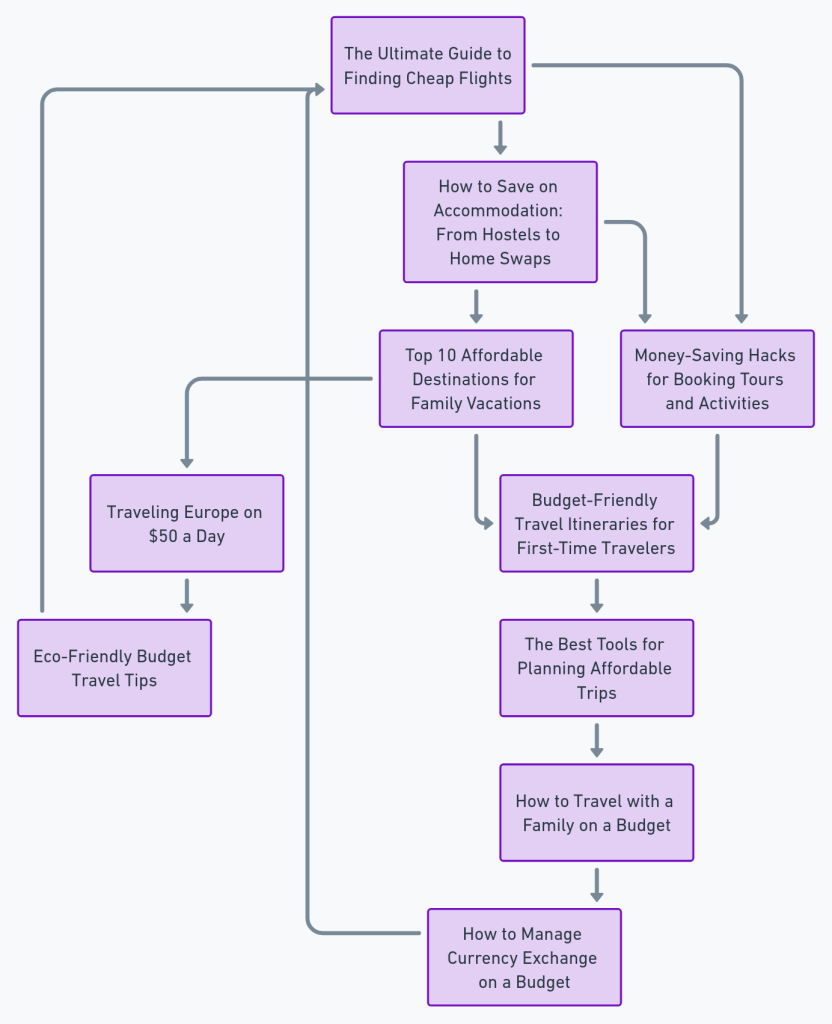
How to Use Internal Links in Your Content Map:
Within Posts: Add contextual links to related posts. For example, in a post about “Morning Routines Made Easy,” you might link to “Weekend Organization Tips to Save You Time” to give readers additional strategies.
At the End of Posts: Use a “Related Articles” section to suggest similar content.
In Pillar Pages: Include links to all relevant subtopics under each pillar, acting as a hub for readers to explore a particular theme.
Example: Travel Blog Internal Linking
Post Title: “The Ultimate Guide to Finding Cheap Flights”
Internal Links to:
- Money-Saving Hacks for Booking Tours and Activities” in the section about saving on overall trip costs.
- Link to “How to Save on Accommodation: From Hostels to Home Swaps” as part of a broader guide to affordable travel.
This strategy keeps readers moving through your blog while reinforcing the connections between your posts.
Step 6: Build Pillar Pages for Each Core Theme
Pillar pages are comprehensive posts that serve as hubs for related content within a specific theme. They provide an overview of a core topic, with links to individual posts that explore subtopics in detail.
Benefits of Pillar Pages:
• Organized Content: Helps readers navigate your blog easily.
• Stronger SEO: Search engines favor well-structured content hubs.
• Higher Engagement: Encourages readers to explore multiple posts.
Example Pillar Page for a Parenting Blog:
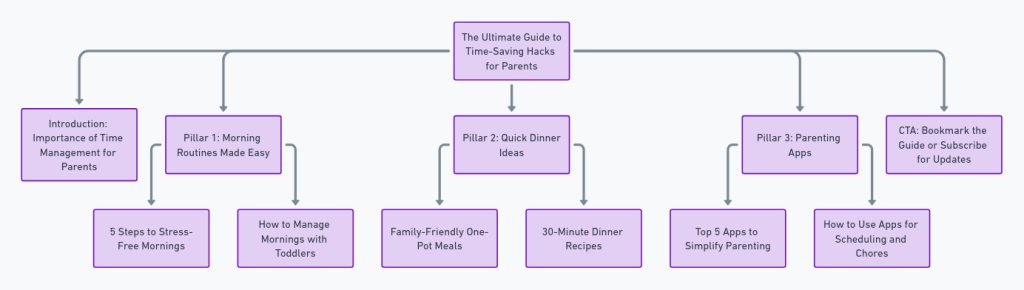
Pillar pages act as the anchor for your content map, ensuring every subtopic ties back to your main themes.
Each pillar is a key theme within the broader topic. The pillar page acts as a hub, linking to more detailed subtopics or sections.
Pillar 1: Morning Routines Made Easy
Subtopics:
- 5 Steps to Stress-Free Mornings”: Practical advice for simplifying mornings.
- How to Manage Mornings with Toddlers”: Tips for parents of young children.
Pillar 2: Quick Dinner Ideas
Subtopics:
- Family-Friendly One-Pot Meals”: Easy meal ideas for busy parents.
- 30-Minute Dinner Recipes”: Quick recipes for time-pressed families.
Pillar 3: Parenting Apps
Subtopics:
- Top 5 Apps to Simplify Parenting”: Reviews of useful parenting tools.
- How to Use Apps for Scheduling and Chores”: Guides on making the most of apps.
Call-to-Action (CTA)
Purpose: Encourages readers to take action, such as bookmarking the guide or subscribing for updates.
Example: A simple message at the end of the pillar page urging readers to stay engaged.
How Content Pillars Help Your Blog Content Strategy
The pillar page links all these sections together, making it easy for readers to navigate and explore related topics. This structure:
- Improves SEO: By organizing content into clear hubs.
- Enhances User Experience: By helping readers quickly find relevant information.
- Increases Engagement: By encouraging readers to explore multiple subtopics and take actions like subscribing.
This approach makes the content more structured, reader-friendly, and valuable for search engines.
Step 7: Fill Content Gaps
As you develop your content map, you might notice gaps—topics that your audience would benefit from but aren’t yet covered on your blog. Identifying and addressing these gaps ensures your blog remains comprehensive and valuable.
How to Identify Content Gaps:
Audience Feedback: Ask readers what they’d like to learn more about through surveys, comments, or social media.
SEO Tools: Use tools like Ahrefs, SEMrush, or AnswerThePublic to discover trending keywords or questions in your niche.
Competitor Analysis: Check similar blogs to see what topics they’re covering that you’ve missed.
Example:
If your Travel Blog covers budget tips but lacks a post about planning multi-city trips, you could add:
How to Plan an Affordable Multi-City Trip: Tips and Tools.”
Step 8: Plan Seasonal and Evergreen Content
Your content map should balance evergreen content, which remains relevant year-round, with seasonal content that drives traffic during specific times.
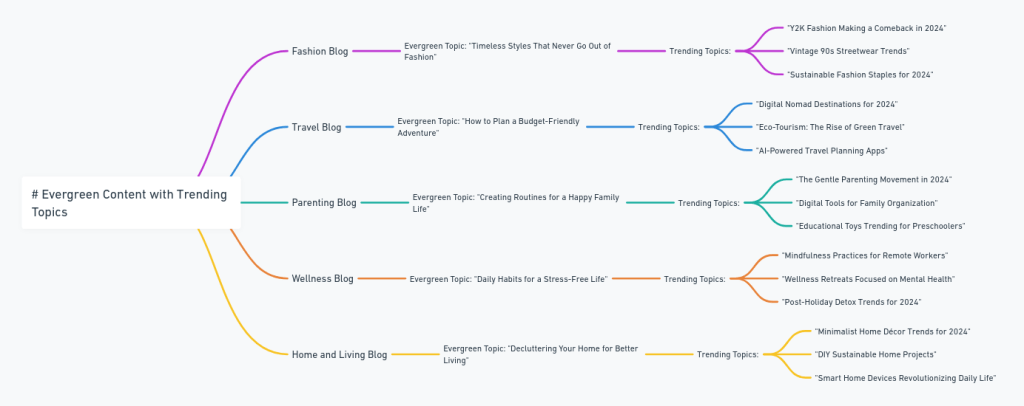
This mind map outlines Evergreen Content topics across various industries, paired with trending topics to make them relevant and appealing to audiences. Here’s the description:
Fashion Blog
- Timeless Styles That Never Go Out of Fashion: Evergreen concepts such as classic wardrobe staples are enhanced with trending topics like Y2K fashion making a comeback, vintage 90s streetwear styles, and sustainable fashion staples for 2024.
Travel Blog
- How to Plan a Budget-Friendly Adventure: This evergreen topic covers essential travel tips, while trending topics include digital nomad destinations for 2024, eco-tourism as a growing trend, and the use of AI-powered travel planning apps.
Parenting Blog
- Creating Routines for a Happy Family Life: Timeless advice on establishing family routines is enriched with trending topics like the gentle parenting movement in 2024, digital tools for organizing family life, and educational toys currently trending for preschoolers.
Wellness Blog
- Daily Habits for a Stress-Free Life: Evergreen guidance on building stress-free routines is paired with trending wellness themes, such as mindfulness practices for remote workers, mental health-focused wellness retreats, and post-holiday detox trends for 2024.
Home and Living Blog
- Decluttering Your Home for Better Living: Evergreen decluttering tips are made fresh with trending topics like minimalist home décor styles for 2024, DIY sustainable home projects, and the integration of smart home devices into daily life.
This approach combines timeless, always-relevant content with current trends, ensuring that the evergreen topics stay updated and engaging for audiences while maintaining their long-term value.
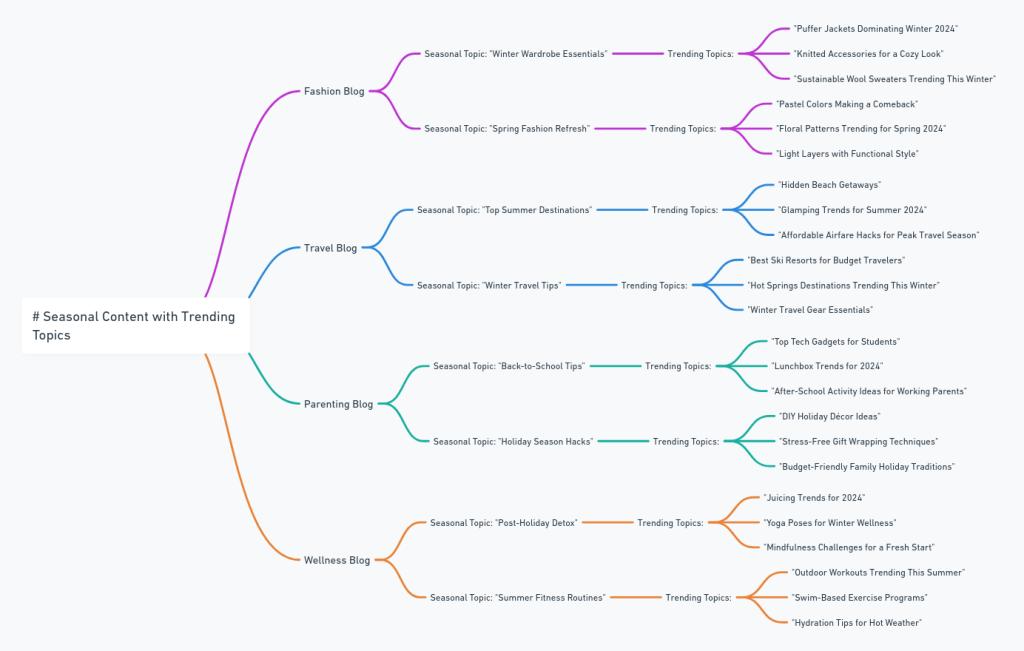
This mind map breaks down Seasonal Content into various industries and highlights trending topics that align with each seasonal theme. Here’s the description:
Fashion Blog
- Winter Wardrobe Essentials: Trending topics include puffer jackets as the dominating winter fashion piece, knitted accessories for a cozy look, and sustainable wool sweaters as a top choice this season.
- Spring Fashion Refresh: Popular trends include pastel colors making a comeback, floral patterns trending for spring, and light layers that combine style and functionality.
Travel Blog
- Top Summer Destinations: Trends focus on hidden beach getaways, the rise of glamping, and hacks for affordable airfare during peak summer travel.
- Winter Travel Tips: Trending topics include budget-friendly ski resorts, winter hot springs destinations, and essential winter travel gear recommendations.
Parenting Blog
- Back-to-School Tips: Trending topics include tech gadgets for students, creative lunchbox ideas for kids, and after-school activities designed for busy parents.
- Holiday Season Hacks: Current trends focus on DIY holiday décor, stress-free gift wrapping techniques, and budget-friendly family holiday traditions.
Wellness Blog
- Post-Holiday Detox: Trends include juicing for health in 2024, yoga poses that support winter wellness, and mindfulness challenges to start the year fresh.
- Summer Fitness Routines: Popular trends include outdoor workouts during the summer, swim-based exercise programs, and hydration strategies for hot weather.
This map bridges timely seasonal topics with current trends, offering blog ideas that are both practical and relevant for readers in each niche. It ensures that content remains fresh and engaging by leveraging what’s trending in real-time.
Step 9: Visualize Your Content Map
A visual representation of your content map helps you see how everything connects at a glance. Use tools like Miro, Trello, or even pen and paper to create your map.
Example Content Map for a Travel Blog:
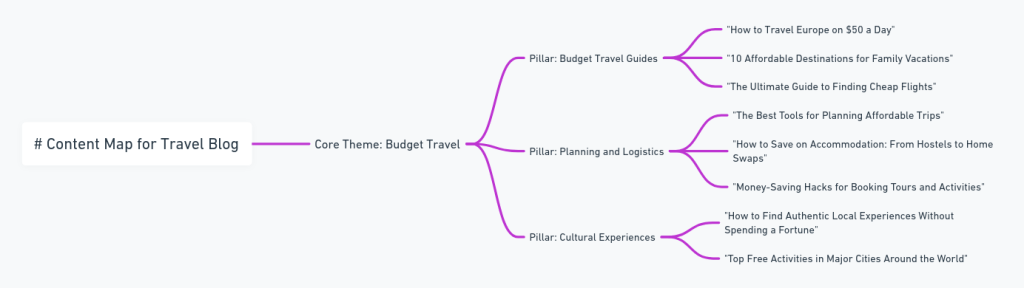
This structure ensures your blog stays organized, while visually mapping out interconnections makes it easy to identify gaps and opportunities.
Examples of Content Gaps
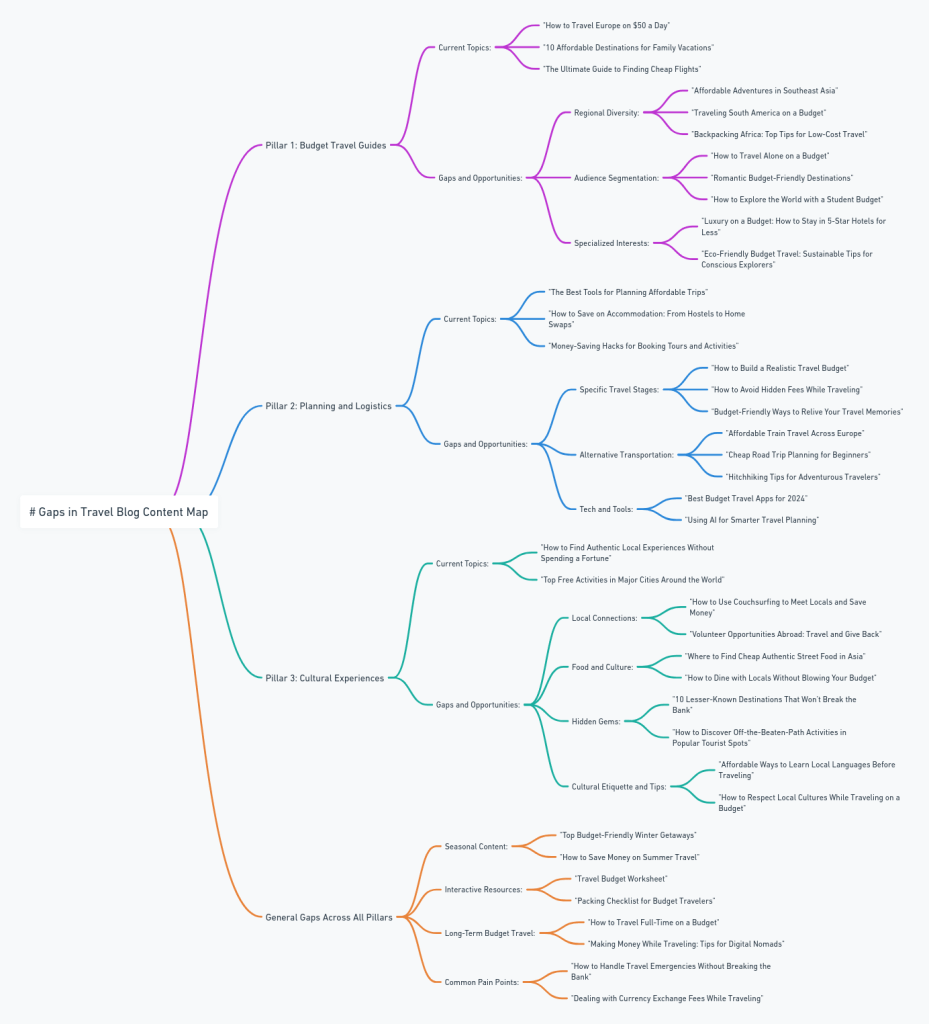
These content gaps provide opportunities to broaden your travel blog’s scope, attract a wider audience, and deliver more value to your readers. Whether it’s expanding into regional diversity, creating interactive resources, or addressing common travel pain points, choosing to address these gaps will not only fill missing areas in your content map but also establish your blog as a comprehensive and trusted resource for budget travelers. Use these suggestions as a guide to refine and grow your blog strategically.
Step 10: Promote Your Content Map
Once your content map is in place, ensure it’s discoverable and engaging for your audience:
• Social Media: Share new posts as part of a series (e.g., “Check out Part 2 of our Budget Travel Toolkit!”).
• Email Newsletters: Create themed emails linking to multiple posts under a single pillar.
• Pinterest: Use visually appealing pins to link back to your blog’s pillar pages or series.
By promoting your content map strategically, you’ll drive traffic to not just one post, but an interconnected network of valuable articles.
Build Your Blog with Intention
Mapping your blog content is more than just planning posts—it’s about creating a cohesive, strategic experience for your readers. By defining your purpose, organizing your themes into pillars, and interlinking your posts, you’ll build a blog that’s not only engaging but also optimized for growth.
Whether you’re just starting or looking to refine your strategy, content mapping ensures your blog delivers consistent value while remaining easy to navigate. Start building your map today, and watch your blog transform into a trusted resource your audience loves!


 Whimsical Connotations